Fatum
Interactive gamebooks to play and to write in your browser
Long adventures with branching choices, and a workshop to write your own.
Experience solo role-playing adventures. Build your story scene by scene, with characters and interactive choices: no group and no game master needed to sit down and play.
Want to write your own? The guide explains what the engine can do and how to use the editor, screen by screen. Read the guide
Play alone, whenever you like
Start an adventure in seconds, with no calendars to line up and no table to gather.
Interactive scenes
Move scene by scene: your choices steer the story and the characters who fill it.
Your adventures, saved
Your run is saved at every choice, and you can pick it up again for 30 days from the adventure's page. Discovered endings and achievements stay in your account.
What it looks like
The pictures below are of La relève de Basse-Fange, the demonstration adventure: a complete gamebook, read in the browser, then opened in the workshop it is written with.
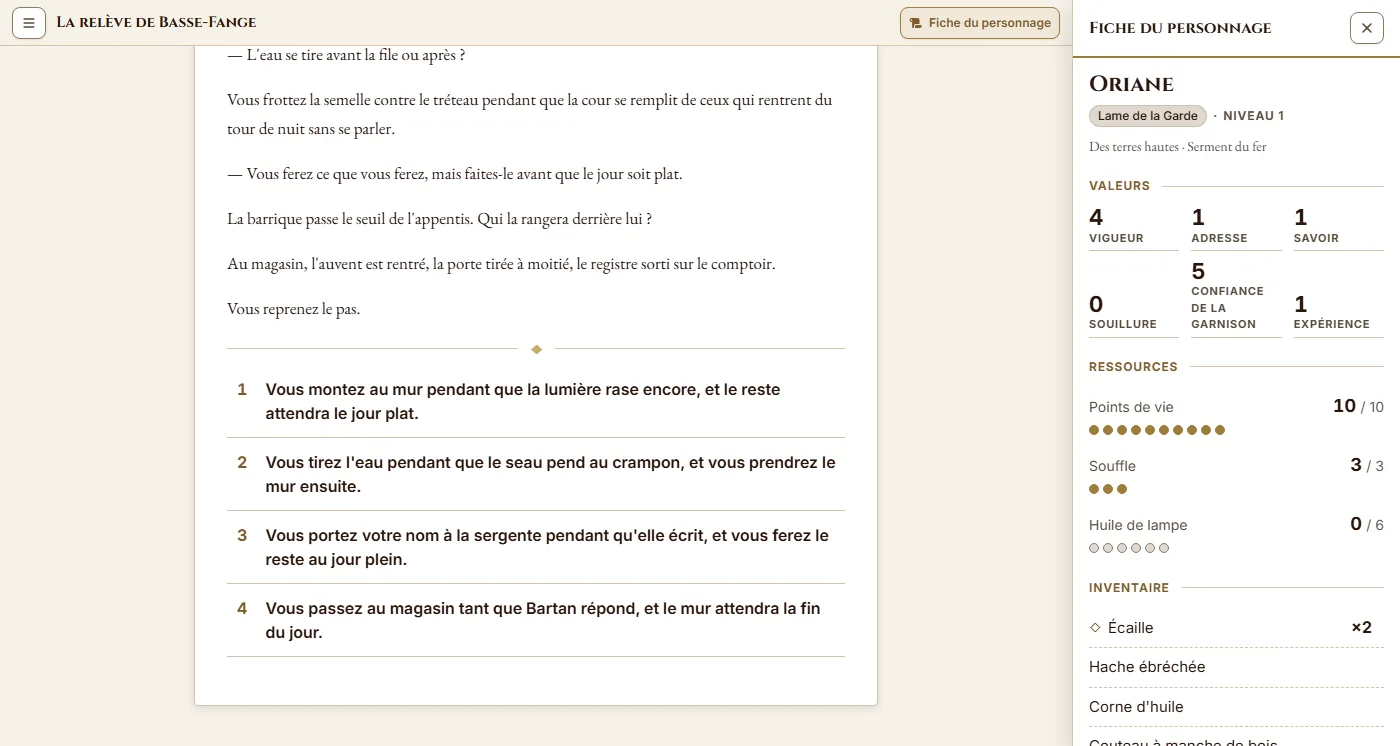
A scene, then your choices
Each scene reads like a page of a book. Below the text, numbered choices open what comes next, and only the ones your run allows are shown. The character sheet sits beside it: values, resources and inventory, updated with every action.
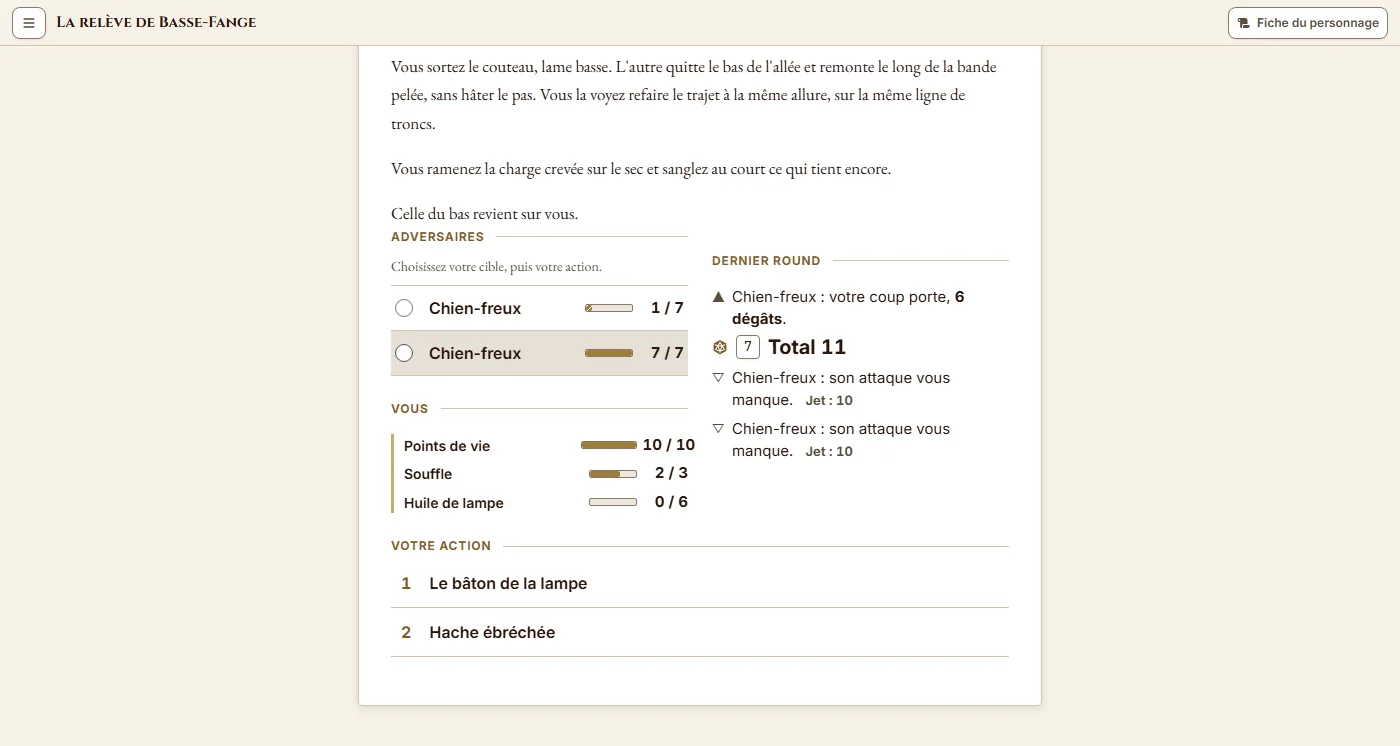
Dice, hit points, fights
An adventure can carry a real game system: dice tests, resources that run out, items, statuses, shops and fights played in rounds. None of it is required: a choice-driven story without a single roll plays just as well.
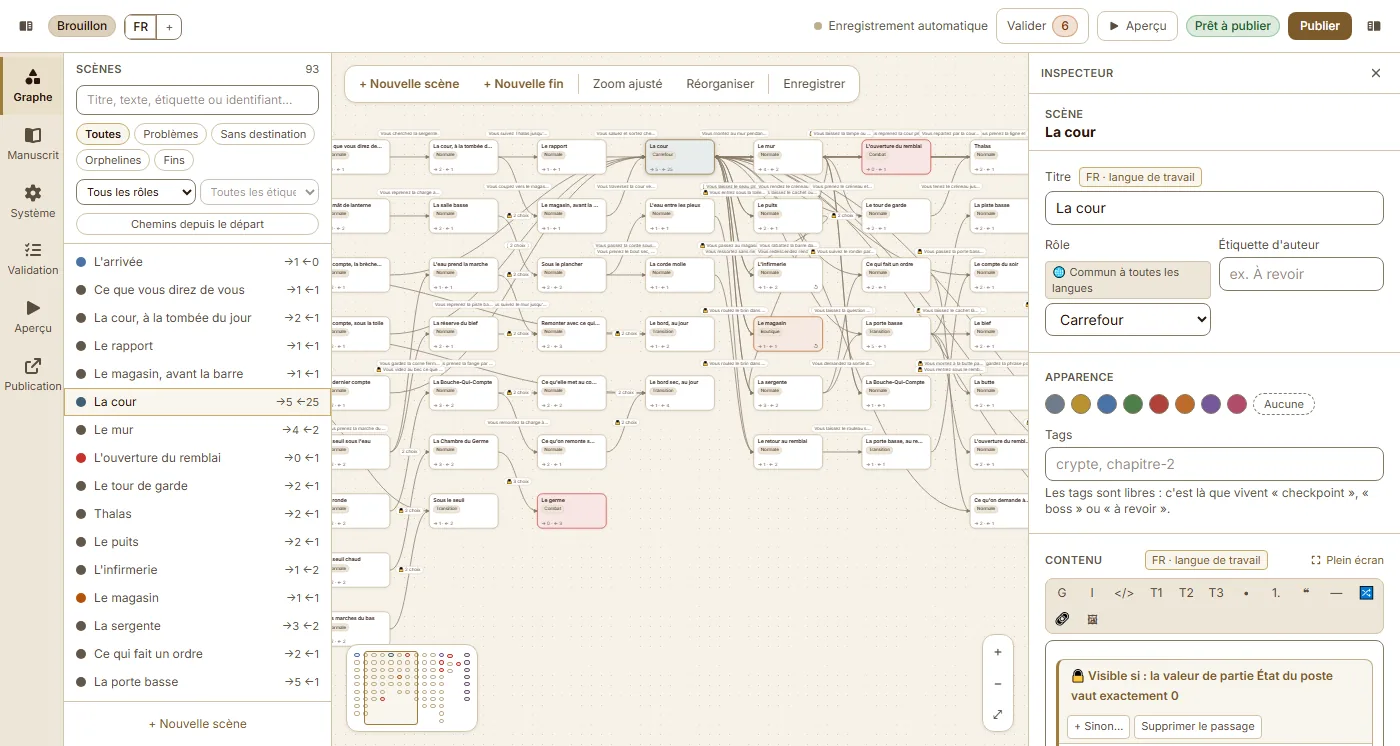
A workshop to write your own
The graph shows every scene and the links between them, the inspector sets what each choice requires and what it causes, and the preview plays the draft from any scene. Everything saves as you type, and validation tells you what blocks publishing.
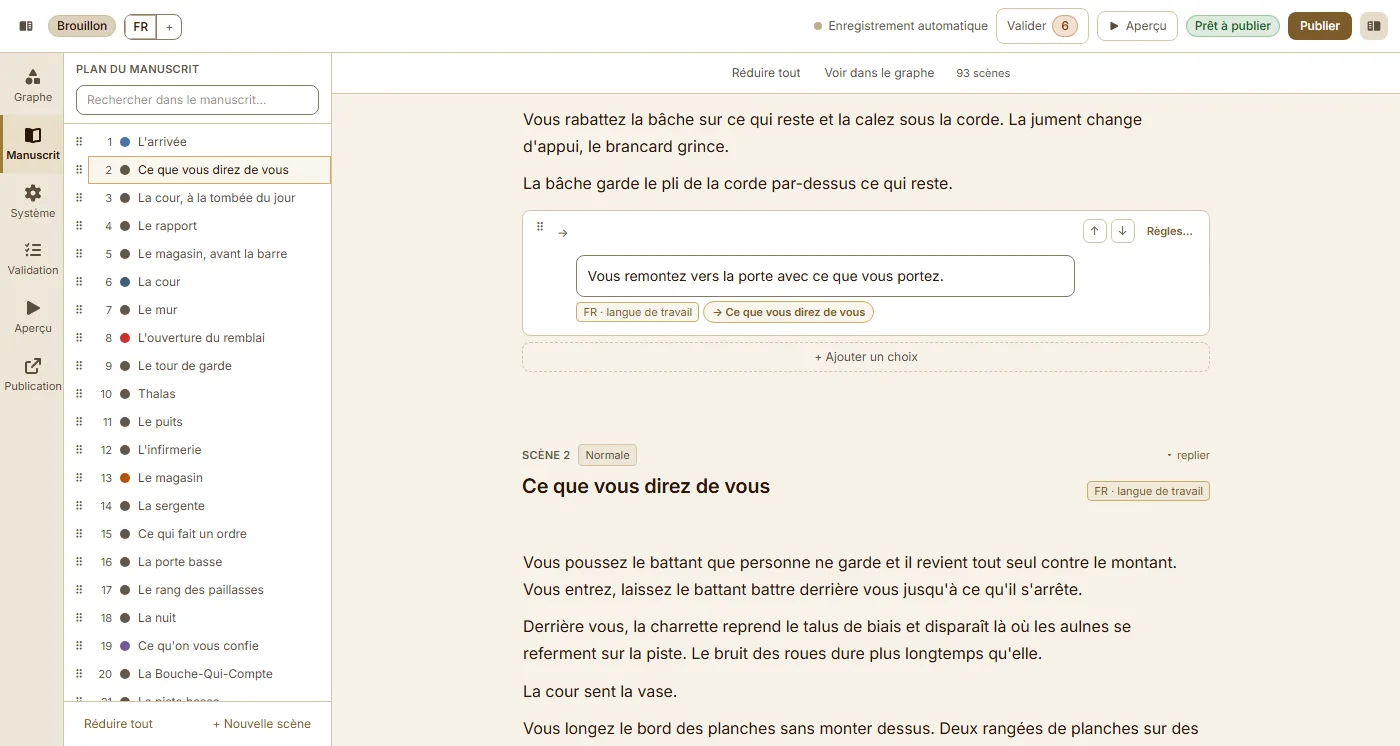
Or along the text, as in a book
Manuscript mode shows the whole adventure as one document: the scenes follow one another in the order of the outline, each with its text, and the choices slip in between them. You write as in a word processor; the outline on the left reorders by dragging, and the graph reflects every change.