Eighteen lists
The left panel lists them, ordered from the simplest to the most composed: values, resources, items, events, formulas, images, endings, tests, statuses, traits, classes, level rewards, abilities, summary counters, shops, achievements, combats, damage types.
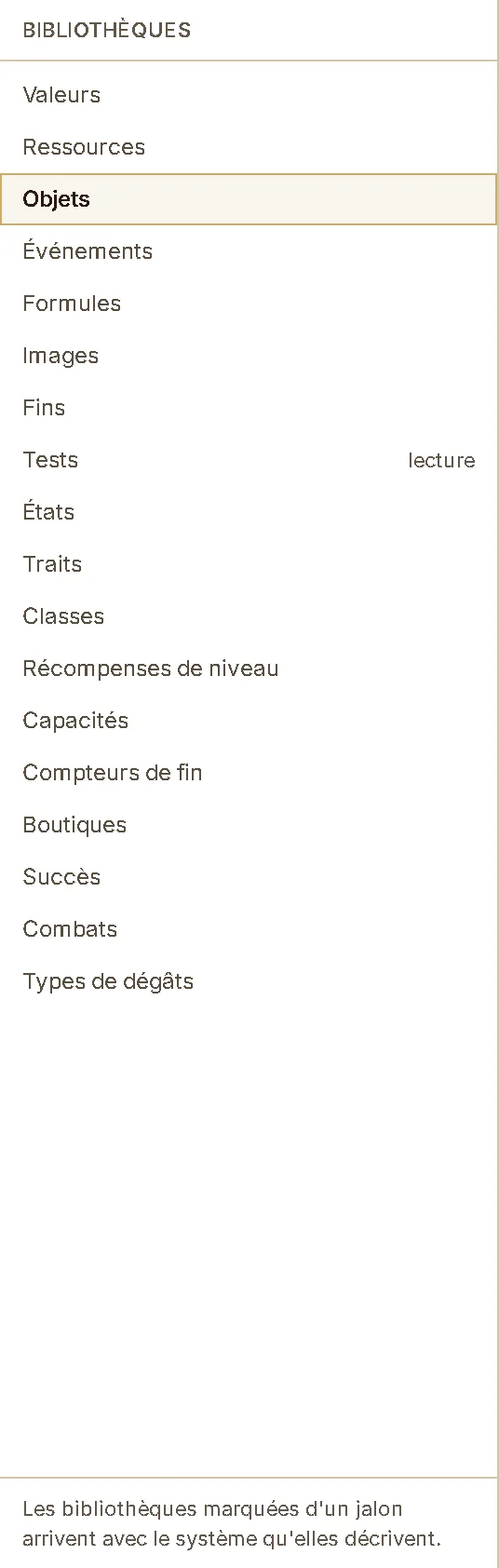
One is not editable: Tests. A test belongs to the choice that carries it, so this list is only a view: it tells you which tests exist and which scene holds them. Reusing a test means writing a second one.
The same page for all of them
An open library shows its list on the left and the selected row's detail on the right. The gestures are the same everywhere, which means learning one library is learning all of them.
- Search and filter. A long list narrows as you type, and the chips above restrict it by family.
- "+ Ajouter". Creates an empty row and selects it. You name it afterwards; the internal identifier is derived from the name.
- The detail form. Its fields change with the library, but the name and the description are always there.
- Duplicate. The copy references what the original referenced; it does not copy the definitions it names.
- Usages. Every row knows who names it, and each mention is a link to the exact place.
- Delete. Refused while anything uses it, and the question tells you how many things do.
An item
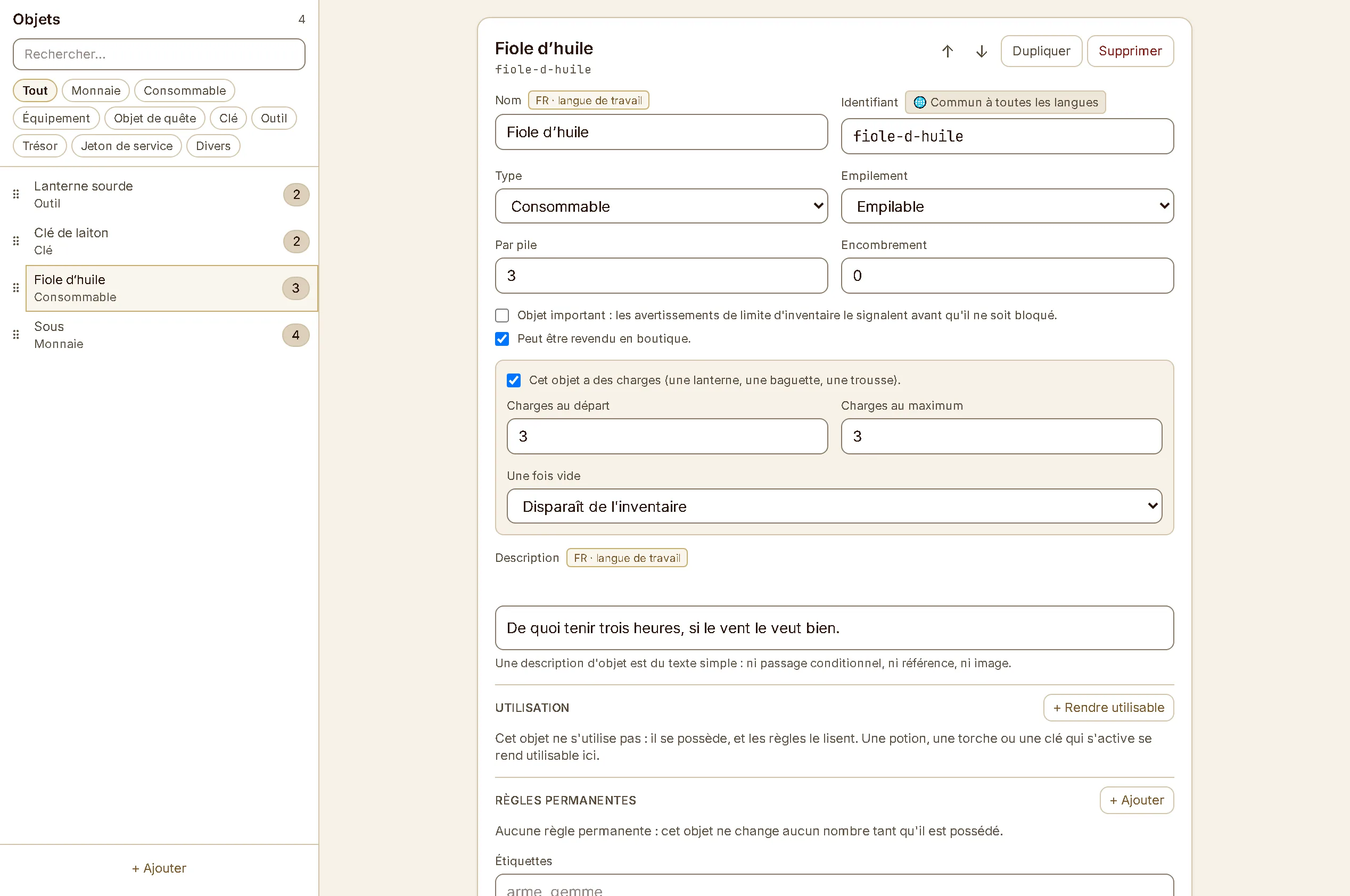
An item carries more fields than the other definitions, because it answers more questions: does it stack, up to how many, can it be sold, does it have charges, what becomes of it once empty.
A shop
A shop is a list of offers. Each offer carries what it costs and what it gives, as rules: remove six coins, give a key. An offer may also give nothing material and merely set an event, which is how you write "buying a piece of information".
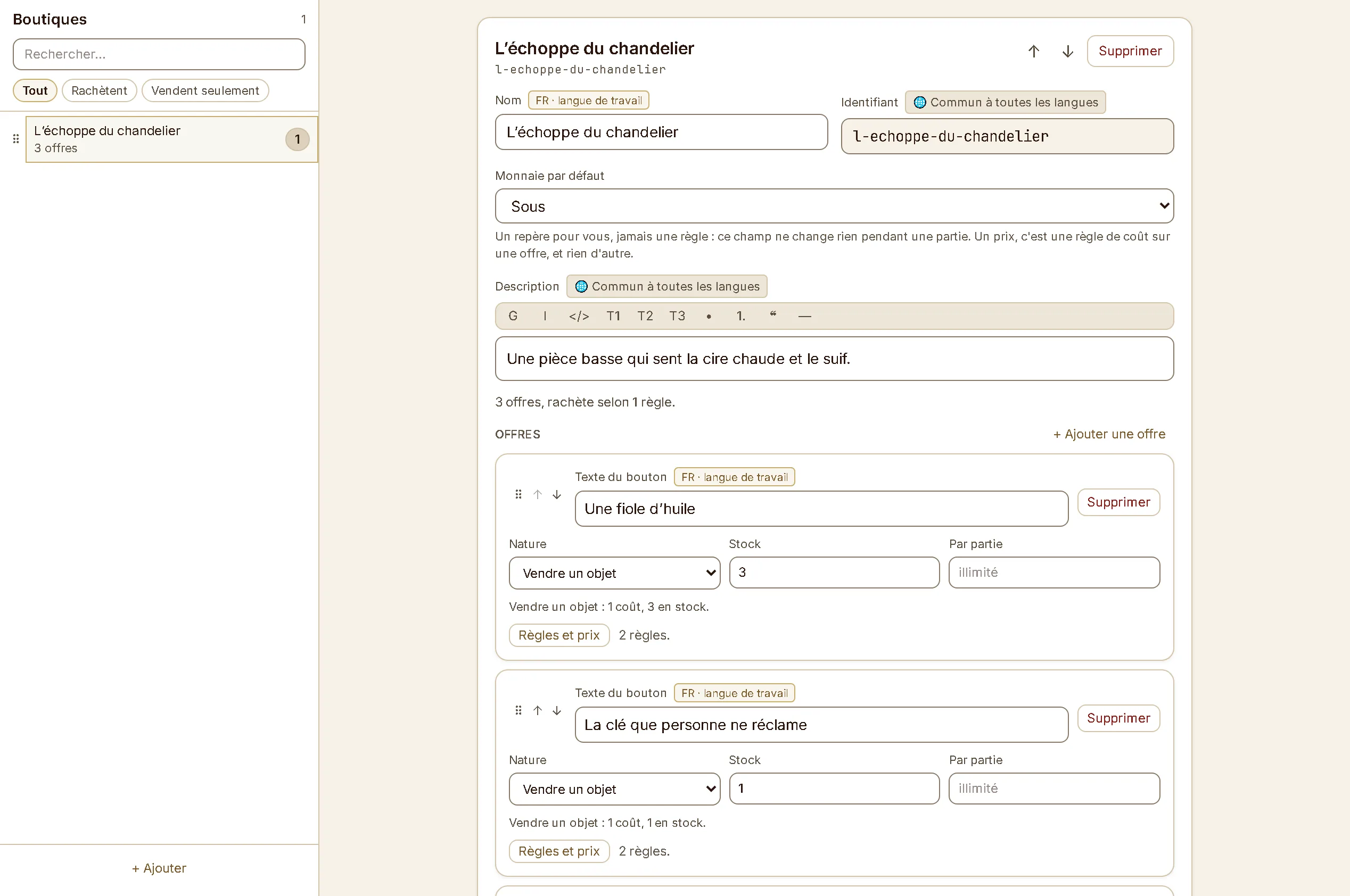
The order of the offers is the order the player sees, and nothing more. You change it by dragging the grip to the left of a row.
A combat
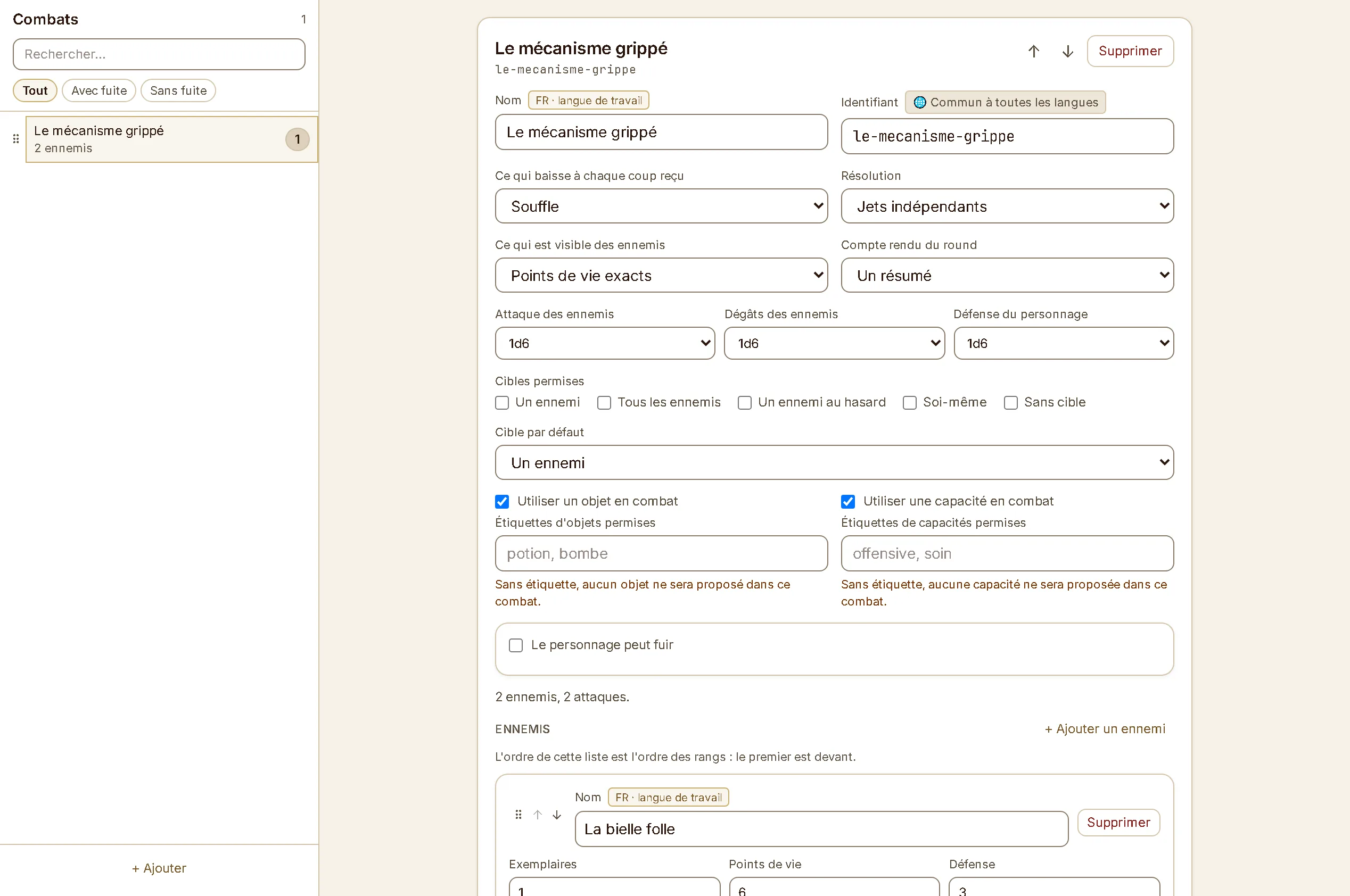
A combat declares its enemies, the ways of attacking offered to the player, what counts as a defeat, and where you go afterwards. The attack and damage formulas come from the formula library: the combat names them, it does not hold them.
Deleting, and what it costs
Before deleting anything, the editor counts what uses it and says so in the question. If there are usages, the delete is refused: it is not a confirmation to click harder, it is a no. Remove the references first, and the row will go afterwards.
Two deletions behave differently, because they take something else with them: deleting a scene takes its outgoing choices and the arrows that pointed at it, and deleting an ending takes its scene. Here too, the question states the numbers before acting.