Validation
The report sorts its findings into three levels: blocking, warnings and information. Only the blocking ones prevent a publication. A warning deserves a look and has never stopped anyone from putting their adventure online.
Each finding names the object it targets and takes you there in one click, on the right field. They are written to be acted on, not counted: "this level reward applies no effect" says what to do.
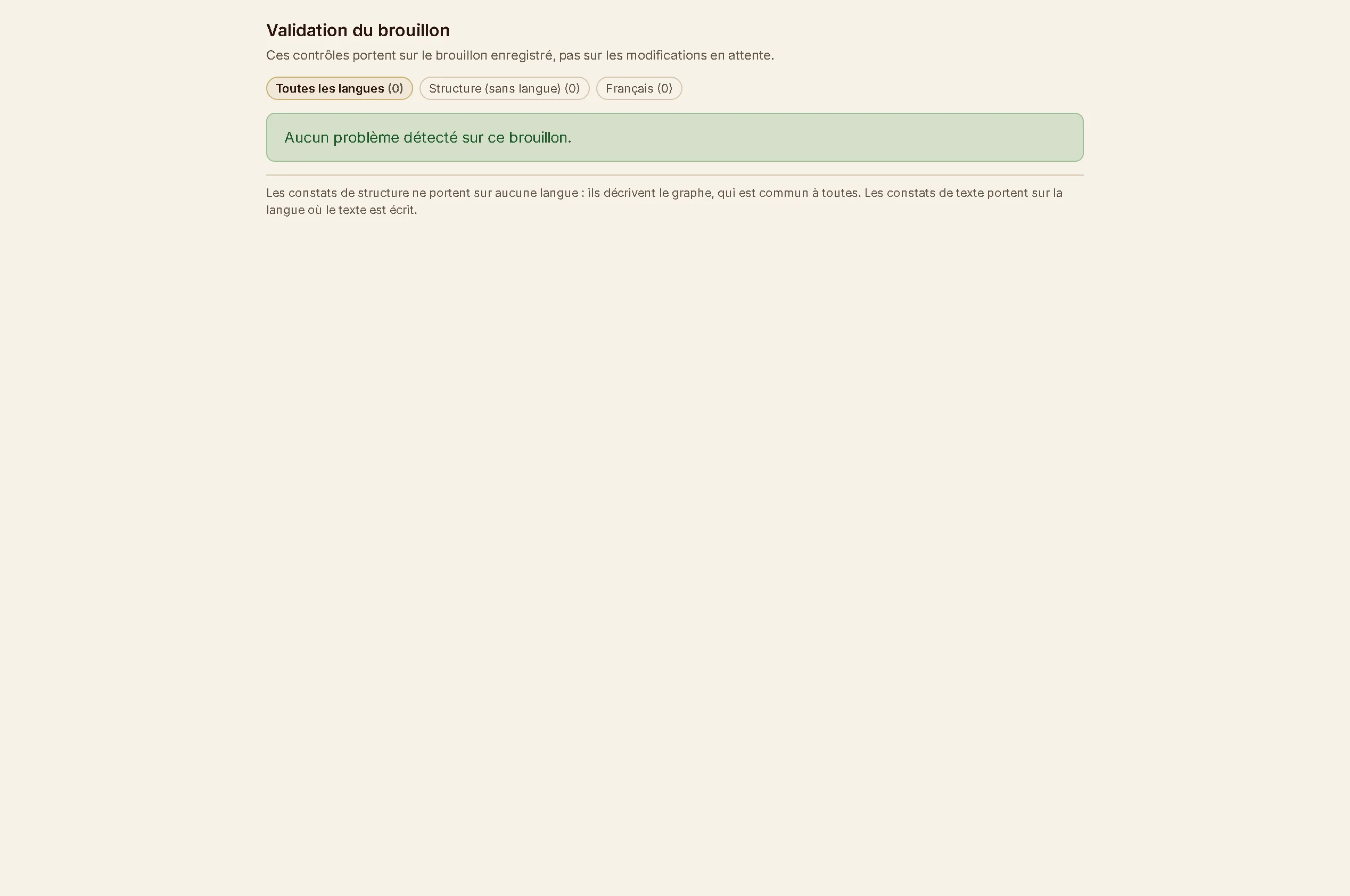
A filter separates structural findings, which carry no language, from those about a given language's text. That is what lets you sort the graph out without drowning in missing translations.
The playtest
Aperçu plays your draft with the same engine, the same rolls and the same rendering as a real run, and saves nothing. The left panel decides where you start and with what: any scene, and a starting amount for items, values and resources.
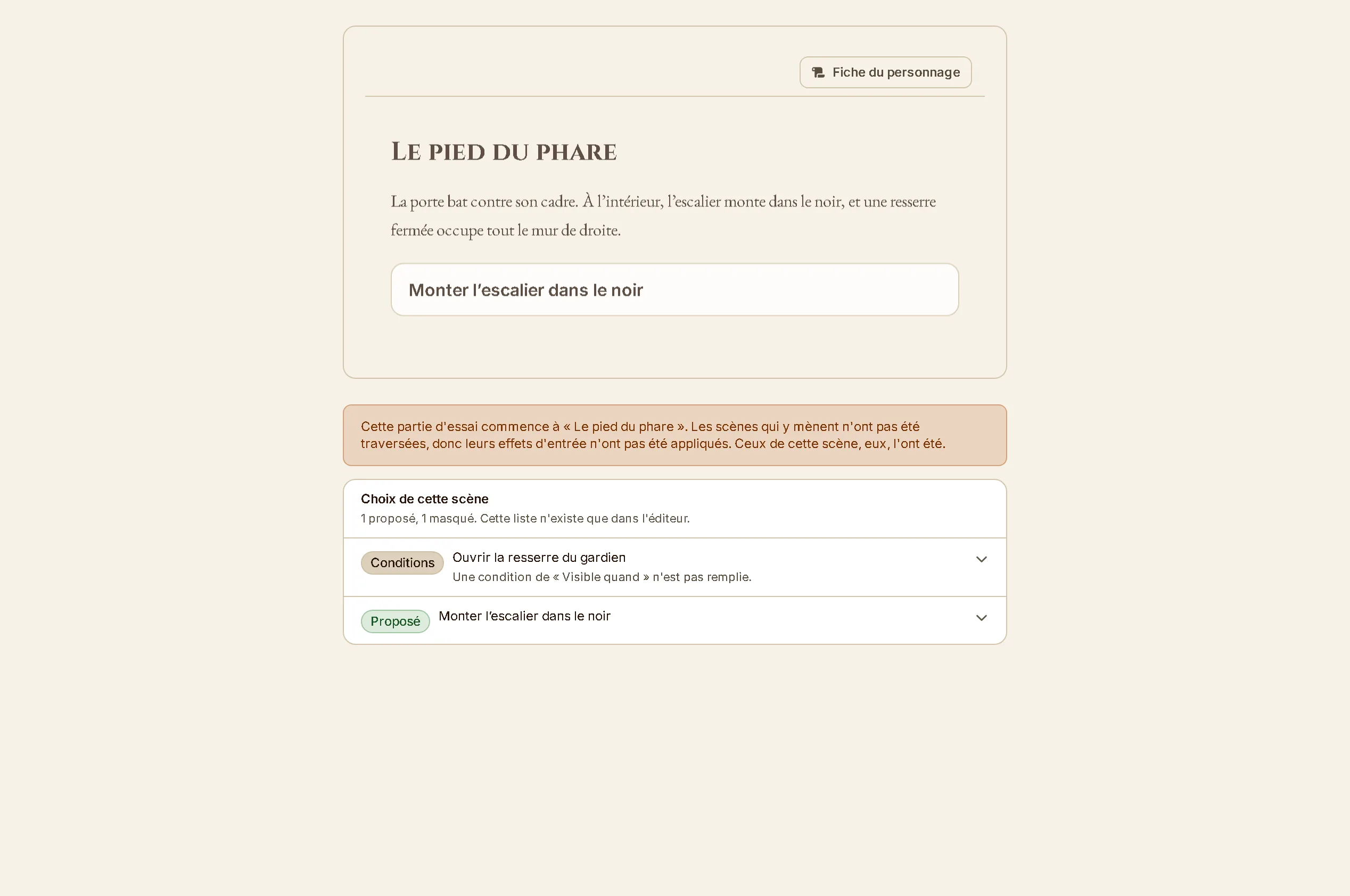
Why is this choice hidden?
Under the playtest, a list shows every choice of the scene, the offered ones and the ones that are not. Each hidden choice names the check that failed, and unfolds into the detail, row by row, in the very sentences you wrote the rule in.
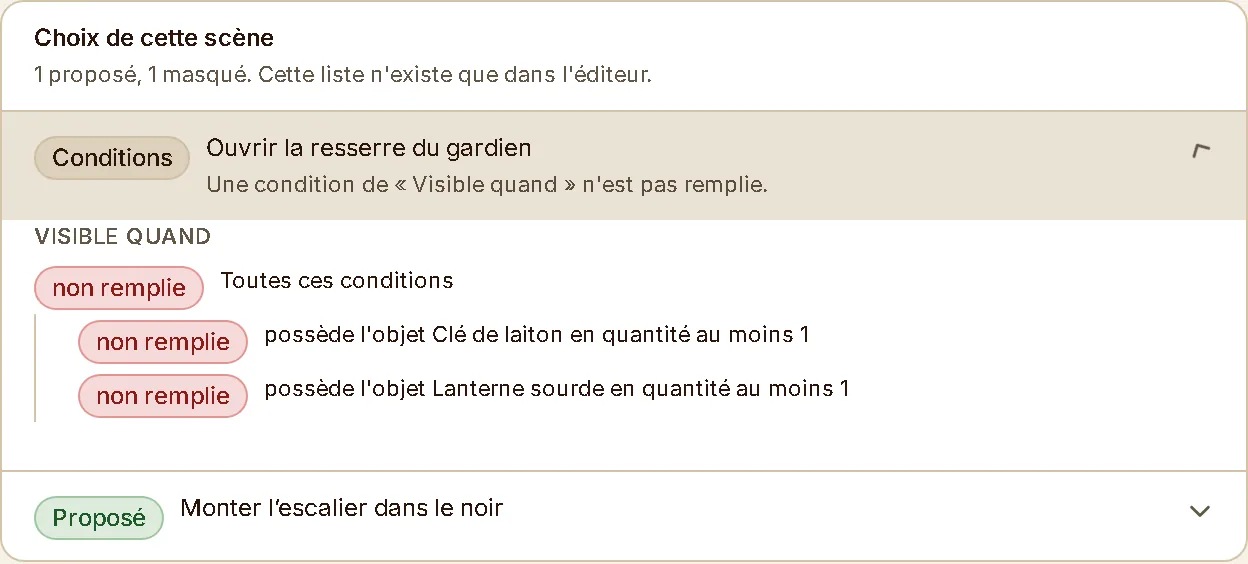
A row can be "not met" or "impossible to evaluate", and those are not the same. The first is the game working; the second is a rule the engine cannot read, and it says why.
Publishing
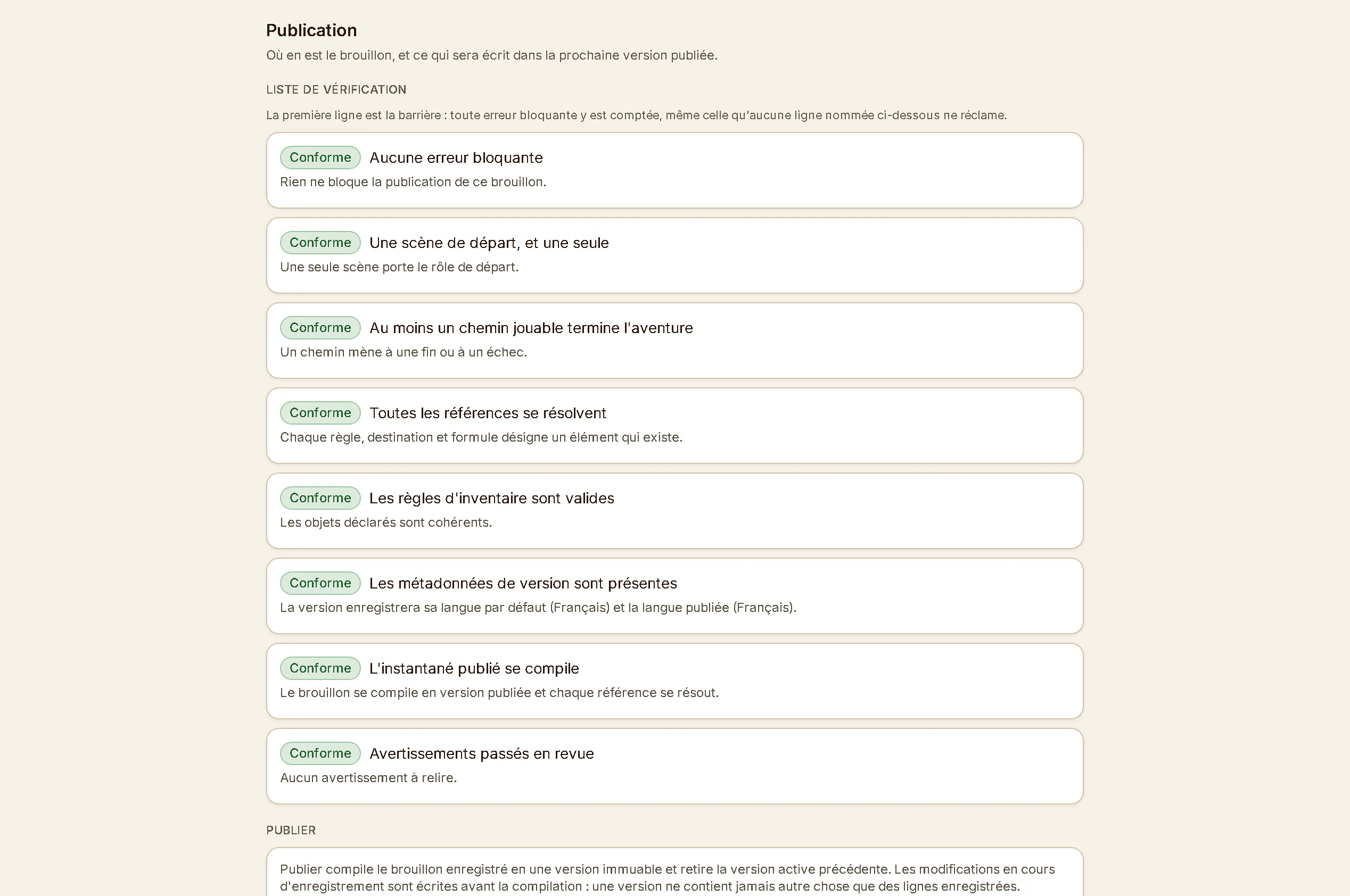
Publication mode holds a list of eight checks, each with its state and its count: no blocking errors, one start scene and only one, at least one path that completes the adventure, every reference resolved, valid inventory rules, the metadata present, the snapshot compiling, the warnings reviewed.
The confirmation before publishing states what is about to happen: the languages that go, the ones left aside and why, the number of warnings you are leaving behind, and the version this one will retire.
Versions
Publishing never overwrites anything. A published version is frozen: publishing writes a new one and retires the previous. The left panel lists them, newest first, with their date, their languages and their counters.
In the catalogue, or out of it
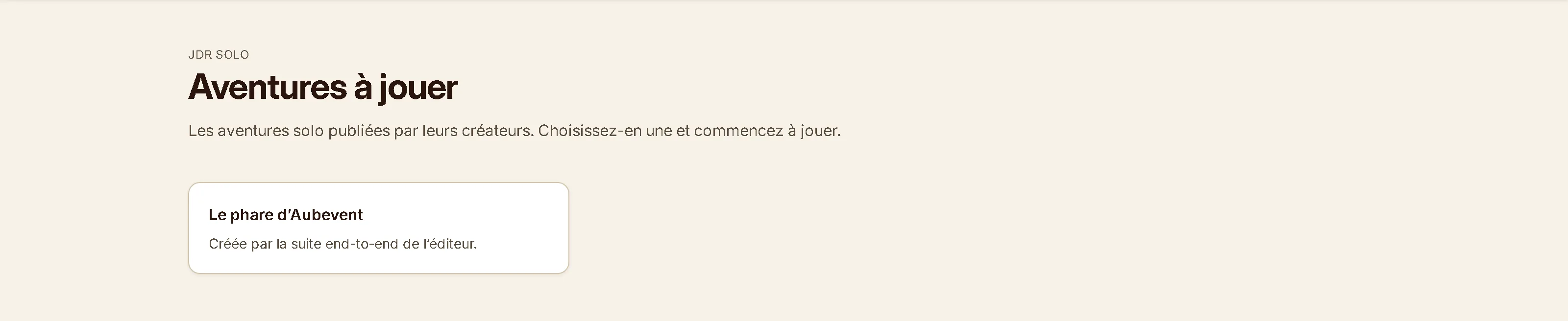
Once published, your adventure appears in the public catalogue, where anyone can find it. The settings page offers a two-state control to take it out.
Mind the exact meaning: leaving the catalogue is not unpublishing. The adventure stays playable at its address, runs in progress continue, and only its presence in the list disappears. There is no button for withdrawing an adventure already online.